
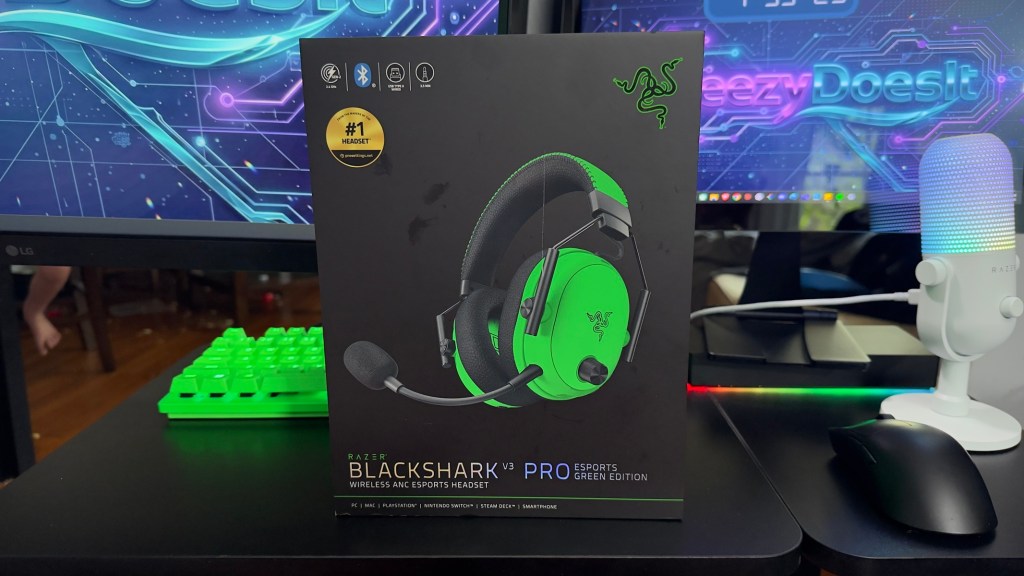
Razer BlackShark V3 Pro at a Glance
- HyperSpeed Wireless Gen-2 over 2.4GHz with latency as low as 10ms
- Simultaneous audio that runs 2.4GHz and Bluetooth together, with a toggle to auto-mute PC sound on an incoming call
- Four ways to connect, covering 2.4GHz wireless, Bluetooth, USB, and 3.5mm
- Second-gen TriForce Bio-Cellulose 50mm drivers tuned for cleaner highs, clear mids, and balanced bass
- THX Spatial Audio with 7.1.4 virtual surround, full support needs Razer Synapse on Windows 11 23H2 or newer
- Hybrid active noise cancellation with four mics, plus Ambient Mode and four adjustable cancellation levels
- Detachable HyperClear Full Band 12mm mic with a unidirectional pickup pattern
- Pro-tuned esports EQ profiles for titles like Counter-Strike 2, Apex Legends, Call of Duty, and Halo Infinite, with up to nine custom profiles saved to the headset
- On-ear controls for EQ, connection modes, ANC, game and chat balance, mic monitoring, and footstep boost
- Up to 70 hours of battery, roughly six hours from a 15-minute charge
Dual-layer FlowKnit memory foam cushions with 15-degree swivel joints - $249.99
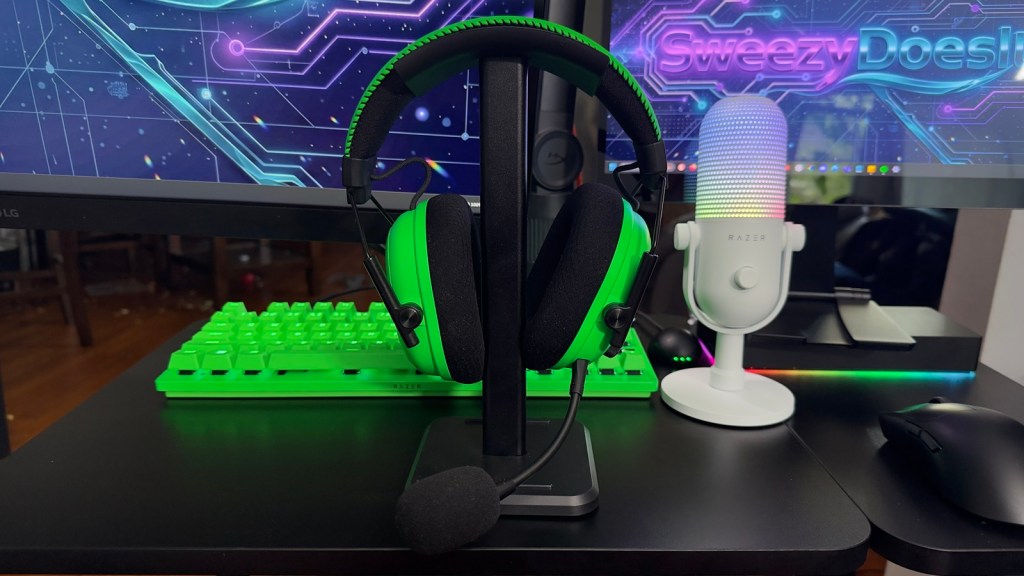
Razer has spent years turning the BlackShark line into a favorite among competitive players, and the BlackShark V3 Pro is the company’s most complete swing at that crowd yet. It arrives at $249.99 with a stack of upgrades aimed squarely at people who care about hearing a footstep half a second before the person around the corner does. Lower-latency wireless, hybrid active noise cancellation, redesigned drivers, and a better microphone all show up on the spec sheet. I spent real time living with this headset across gaming, movies, and everyday listening, and most of what Razer promises holds up.
Build and Comfort
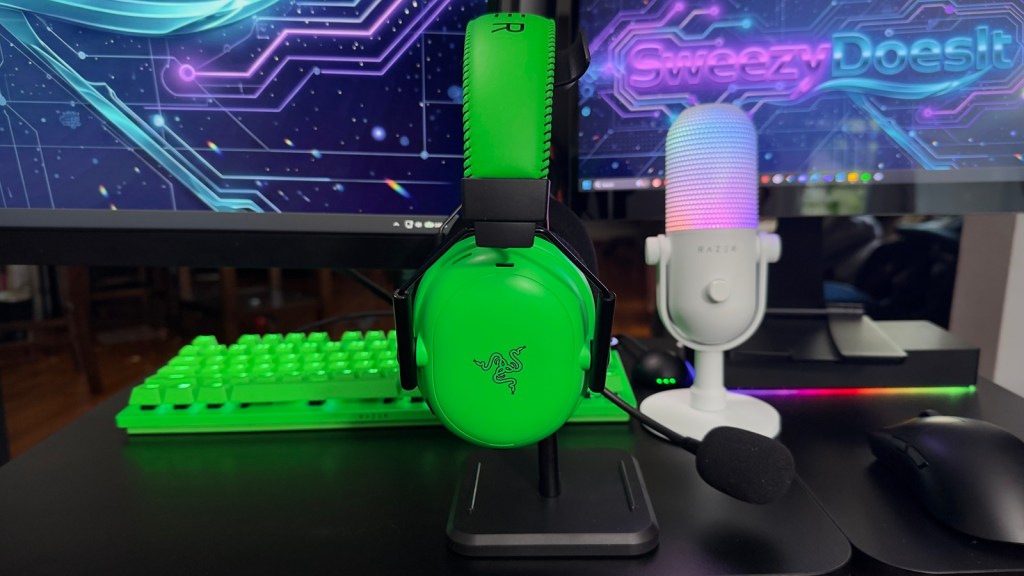
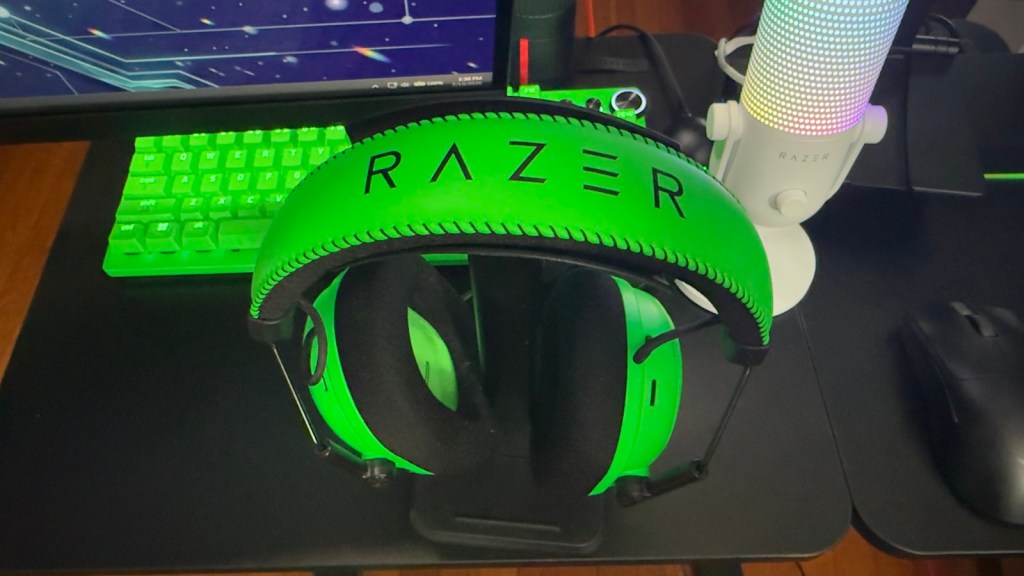
Build quality is solid. The headband and ear cuffs are nicely cushioned, and after long hours of wear the top of my head never started to ache, which is where a lot of heavier headsets fall apart. Razer leans on dual-layer FlowKnit memory foam cushions here, pairing a leatherette layer for isolation with a breathable fabric meant to cut down on heat and moisture during marathon sessions. In practice that combination did keep my ears from turning into a sauna.
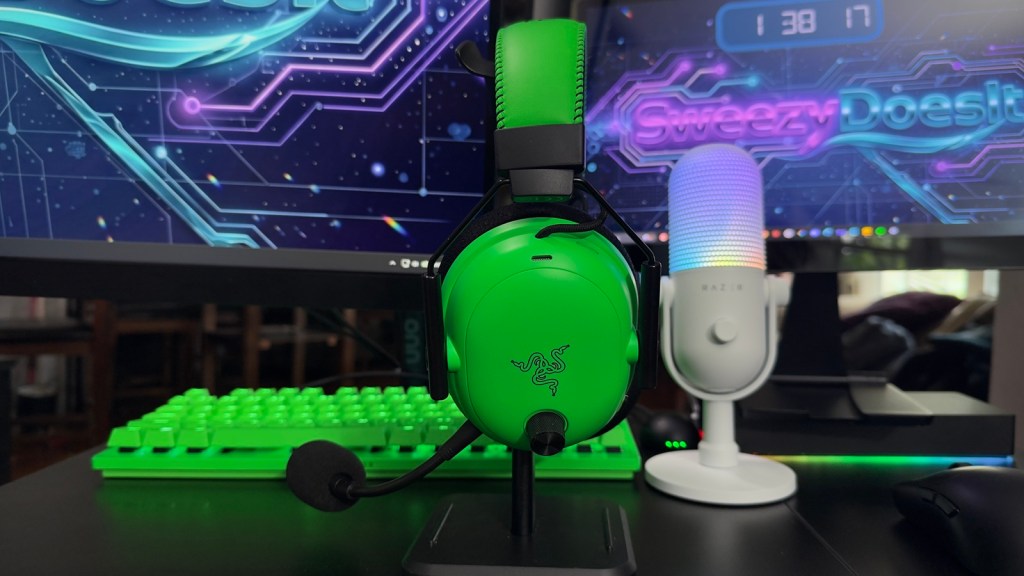
The 15-degree swivel joints are the comfort feature I was most skeptical of, and they earned their spot. They perform as advertised and genuinely helped the cups form a nice seal around each ear. There is one quirk worth calling out, though. It can be surprisingly difficult to get the ear cuffs even while keeping the headband centered on top of your head. More than once it felt like the band was sitting crooked, and my youngest son ran into the exact same thing when he tried it. It never became painful, but it is a small daily annoyance that a competitor at this price should have solved.
Wireless, Connectivity, and the Simultaneous Audio Trick
At the heart of the headset is Razer HyperSpeed Wireless Gen-2. Over its 2.4GHz connection Razer claims latency as low as 10 milliseconds, which is the kind of number that matters when gunfire, footsteps, and ability cues need to stay glued to the action onscreen. You are not locked into one pipe either. The BlackShark V3 Pro also connects over Bluetooth, USB, or a 3.5mm cable, giving it four ways to reach whatever you happen to be playing on.
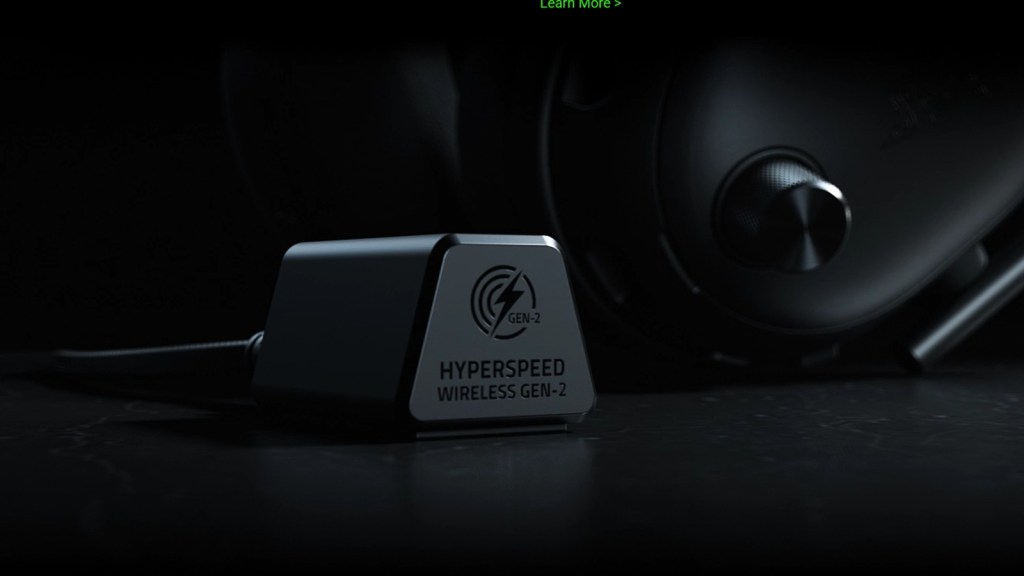
One of my favorite features is one that sounds mundane, but provided a smile to my face. The headset can run its 2.4GHz signal and a Bluetooth device at the same time, and there is a toggle that mutes the PC audio the moment a call comes in on your phone. When my phone rang, the game volume dropped out automatically so I could take the call without fumbling for anything. Because it is a toggle, I could switch that behavior on or off depending on my mood. This is the sort of thoughtful convenience that separates a premium headset from a merely expensive one.
Sound Quality
Overall sound quality is very good. The highs are clean, the mid-tones stay clear, and the bass strikes a balance I appreciated. It never overwhelmed my ears, but there was still enough of it to feel satisfying rather than thin. That tuning comes from second-generation Razer TriForce Bio-Cellulose 50mm drivers, which Razer says cut harmonic distortion while sharpening frequency separation, bass precision, and positional clarity.
The positional claims are the whole point for a competitive headset, and this is where the BlackShark V3 Pro delivered. Switching to the FPS equalizer setting, footsteps were easy to pick out and the direction of incoming enemy fire was clearly distinguishable. That is exactly the advantage this headset is selling. On the entertainment side, Movie mode delivered a genuinely immersive feel, so the tuning is not a one-trick pony built only for shooters.
For anyone chasing every last drop of spatial accuracy, the headset also supports THX Spatial Audio with 7.1.4-channel virtual surround, which adds simulated overhead positioning to the usual soundstage. Full 7.1.4 support does come with a catch. It requires Razer Synapse and a PC running Windows 11 version 23H2 or newer, so console and older-Windows users will not get the complete experience.
Noise Cancellation
Hybrid active noise cancellation is one of the headline additions to the line, built on a four-microphone array, and it worked well in my testing. Some ambient noise still slipped through, but never enough to be distracting or a nuisance. You can choose between ANC, Ambient Mode, and standard listening, with four adjustable cancellation levels available through Razer Synapse or the Razer Audio mobile app.
Ambient Mode deserves a nod of its own. It let the world around me stay audible without drowning out whatever I was listening to, which is the balance so many headsets get wrong by making passthrough either useless or overwhelming. For anyone who needs to hear a doorbell or a family member mid-session, it works the way it should.
Software and Onboard Controls
Here is a personal preference that Razer happens to satisfy. I want a gaming headset’s software to live on the PC or console the headset will mostly be used on. I do not want to open an app on my phone every time I need to change a setting. Razer keeps the full software experience on desktop through Synapse, which is exactly where I want it.
The onboard controls back that up nicely. On-ear buttons handle EQ presets, connection modes, ANC settings, game and chat balance, microphone monitoring, and a footstep boost, so plenty of adjustments never require any software at all. Razer also ships game-specific esports EQ profiles tuned for titles like Counter-Strike 2, Apex Legends, Call of Duty, and Halo Infinite, and you can build custom profiles and store as many as nine of them directly on the headset. That last part matters if you carry the headset between machines and want your settings to travel with it.
The detachable HyperClear Full Band microphone rounds out the package. Its 12mm capsule uses a unidirectional pickup pattern to grab your voice while shrinking the noise around it, and it pops off entirely when you would rather use the headset for music, movies, or a single-player night. When using the headset and mic with Discord, others told me the mic was clear with no distortion. The included software also did a good job of suppressing background noise, such as a grandson running wild in the background.
Battery and Charging
Battery life is rated at up to 70 hours. I never had an issue using the headset for long periods of time when fully charged, and could typically go about three days between charges. Your real number will depend on connection type, volume, and how hard you lean on ANC. Razer also says a 15-minute USB-C top-up buys roughly six hours of playback, while a full charge takes around four hours. That fast-charge figure is the one I found most useful in practice, since a quick plug-in before a session was almost always enough to get me through it.
The Sweezy Verdict
The Razer BlackShark V3 Pro does nearly everything a competitive headset should, and it does most of it well. The sound tuning is excellent for both footsteps and film nights, the hybrid ANC and Ambient Mode both land, the simultaneous-audio toggle is a small stroke of genius, and keeping the software on the desktop is the right call. The comfort holds up over long sessions too.
What keeps it from a perfect score is a mix of the fiddly headband alignment and a $249.99 asking price that leaves little room for rough edges. Neither is a dealbreaker, and neither undid how much I enjoyed using it. For competitive players who want a premium wireless headset that gets the fundamentals right and layers on genuinely useful conveniences, this one earns its place on your head. It Does It Well.

 SweezyDoesIt
Leave a comment