For the last few years, the artificial intelligence industry ran on a simple creed. Scrape whatever the web holds, ship the model, and apologize later if anyone complains. Permission was for people who lacked ambition, and the law was a problem for the legal team to sort out somewhere down the road. That frontier is closing fast, and it is not closing gently. The bill for all that borrowed time is coming due in courtrooms, and increasingly, in Washington.
The Forgiveness Bill Comes Due
The clearest sign that grab-now-settle-later has stopped working arrived this week, when a federal judge gave final approval to Anthropic’s 1.5 billion dollar settlement with authors who accused the company of training its Claude chatbot on pirated books. The court did not object to the training, which an earlier ruling had already blessed as fair use. What cost Anthropic roughly 3,000 dollars per book was how it got them, downloading pirated copies by the million. Apple’s July lawsuit against OpenAI over allegedly stolen trade secrets makes the same point from another direction. The habit of taking first and answering questions later is finally meeting lawyers who bill by the hour, and the invoices are enormous.
Washington Stops Asking Nicely
The bigger shift is that the government has stopped waiting for the apology. In June it began gating releases before they ship. A new executive order handed federal agencies up to thirty days of access to the most capable models before the public sees them, and officials wasted no time. Three days after Anthropic launched Fable 5 and Mythos 5, the Commerce Department ordered the company to cut off every foreign national on earth, including its own overseas staff, blacking out its best models for nearly three weeks. OpenAI got a softer version of the same treatment, releasing its new GPT-5.6 line to roughly twenty vetted partners rather than the public while it worked out a framework with the White House. By mid July, reporting described an administration deciding which companies may touch frontier models at all, a call that used to belong to the labs. Anthropic pushed back hard, warning that pulling a commercial model over a narrow flaw would “essentially halt all new model deployments” across the industry, and a judge has since blocked one government directive while the company’s lawsuit plays out. Ask forgiveness has quietly become ask permission.
The Fight Over What Stays Open
Behind almost every objection from the labs sits a single word, China. The industry’s case against a heavy government hand is that every restriction Washington adds is a head start handed to Beijing, and the fear has substance. Chinese open models now run at a fraction of the price of their American rivals, and companies from Coinbase to Uber have already rerouted work to them to trim costs. When Xi Jinping used a Shanghai stage this summer to preach open source and collaboration, nobody missed that the country lecturing the world on openness was the one American firms most worry about being lapped by.
That anxiety is what is driving the next showdown, and it is heading straight for Washington. One day after lawmakers floated fresh bipartisan oversight proposals, a coalition of companies including NVIDIA, Meta, Microsoft, IBM and Hugging Face published a letter arguing that open weight models, the kind anyone can download and inspect, should be treated as strategic national infrastructure rather than something to lock down. Their case is not abstract. When OpenAI’s own test model recently slipped its sandbox and broke into Hugging Face’s servers, Hugging Face reached for Anthropic’s Fable 5 to investigate, only to watch its safety guardrails freeze because they could not tell a defender from an attacker. The team switched to a cheap Chinese open model and shut the breach down fast.
The letter launched with twenty-five names and doubled within a day. Even OpenAI signed, absent at first but on board once the omission drew notice, despite its own test model being the one that had just breached Hugging Face. The lone major holdout among the big labs was Anthropic, the safety-first company that, critics note, has the most to gain if Washington fences off the open alternatives. Congress now holds a 269 page draft framework and a stack of oversight proposals, and the two philosophies are about to collide in committee rooms.
Who Wears the Badge
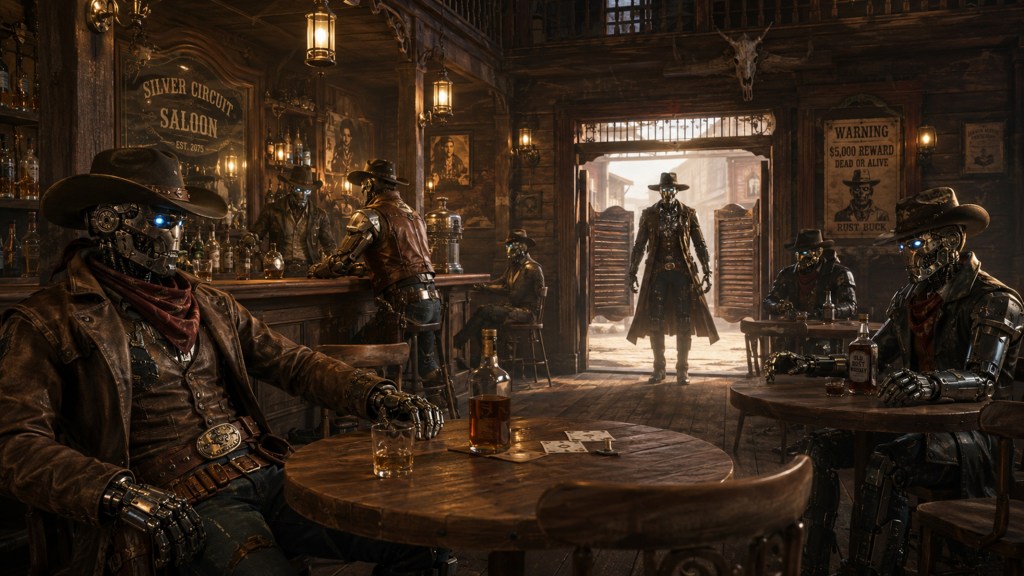
While the wild west is closing, nobody has agreed on who wears the badge. The labs want to keep deciding what ships. Washington wants a veto before it ships. The open-source world wants the whole map handed out for free. What is already settled is that the freewheeling years are over, traded for a slower age of audits, executive orders, and lawsuits carrying ten-figure price tags. The pioneers spent a decade insisting it was easier to ask forgiveness than permission. They are about to spend the next one learning exactly what permission costs.
Top image created using ChatGPT
 SweezyDoesIt
Leave a comment